Aye, Robot: The UK Accent Fight Coming to Game Voicework

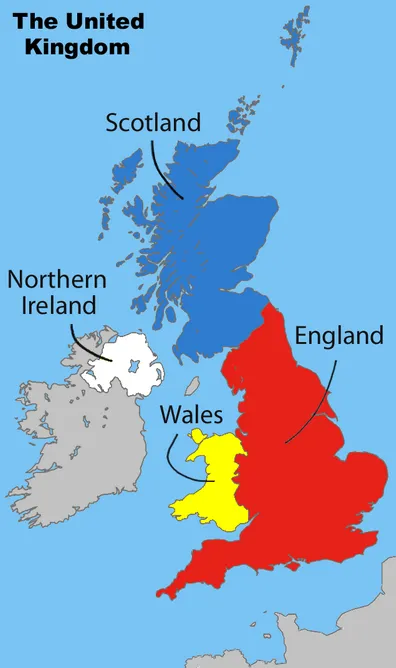
Photo: Mailwriter19, CC BY-SA 4.0, via Wikimedia Commons
Imagine a fantasy innkeeper who sounds like he has just walked out of a Newcastle pub. Not a comedy Geordie, not a vowel-curious London actor doing a bit, but an NPC with the flat vowels and rising rhythm of the actual North East. For years, that kind of voice has been rare in big games. In 2026, AI voice tools are making it cheaper to try — and that is where things get complicated.
AI-generated voice work has moved from novelty to production line. It can generate placeholder dialogue, fill procedural barks, localise a game into half a dozen languages and let a tiny team write more lines than they could ever afford to record. For UK developers, the interesting part is not just the cost. It is the accent.
Why games have historically sounded so posh
British game voices have long leaned towards Received Pronunciation. RP is the accent of the BBC and the boarding school, and for a long time it was treated as the neutral option for fantasy worlds and historical settings. Regional accents were often used as shorthand: the Cockney rogue, the Scottish warrior, the Irish drunk, the Yorkshire farmer. They were costumes rather than characters.
Casting played a part. A lot of voice work is still booked in London, where agents, studios and directors cluster. A session with a named actor can cost more than a small indie team's entire audio budget. When money is tight, a director casts one versatile actor to do five accents rather than five actors who actually have them. The result is a kind of vocal smoothing: everyone sounds a bit like everyone else.
The indie pitch: more voices, smaller budgets
AI voice platforms now offer subscription tools that can generate dialogue in seconds. For a UK indie, that is transformative. You can write a village full of NPCs and hear them speak before you have hired a single actor. You can test a Brummie shopkeeper, a Welsh blacksmith and a Belfast guard without booking a studio. You can generate alternate lines for procedural conversations that would never justify a recording session.
The pitch is not that AI replaces actors. It is that AI lets small teams do things they previously could not afford. That could mean more regional accents in games, not fewer. A studio in Dundee could build a cast of Scottish voices without flying everyone to London. A Welsh developer could make a game that actually sounds Welsh.
Where the accents come from
There is a catch. AI voices are only as regional as their training data. If a model is trained mostly on standard English, it will default to a generic accent that sounds vaguely southern and entirely placeless. Some UK studios are responding by commissioning custom datasets with local actors, paying them for their time and consent. Others are using off-the-shelf voices and hoping for the best.
That difference matters. A synthetic Geordie built from a handful of paid recordings is not the same as a synthetic Geordie scraped from YouTube. The first is a collaboration. The second is a copyright argument waiting to happen.
The actor's view: opportunity or extraction?
British voice actors are not uniformly opposed to AI. Some see it as a useful tool for prototyping, previz and placeholder audio. Others are worried about their livelihoods. Equity, the UK performers' union, has been pressing for consent, compensation and transparency around AI cloning. The fear is not that AI sounds bad. It is that it will soon sound good enough.
For actors with regional accents, there is a genuine opportunity. Studios that want authenticity may need them more, not less. A Liverpool actor who can provide a Scouse dataset, a Scottish actor who can model the rhythms of Glasgow, a Northern Irish actor who can capture Belfast cadence — these are valuable skills. But if the actor is paid once and the model is reused forever, the value flows in one direction.
Authenticity is more than phonemes
Accent is not just a set of sounds. It is rhythm, slang, code-switching, humour and class. A synthetic voice can hit the vowels and still miss the music. When AI-generated dialogue is written by someone who has never been to the region, the result can feel like a costume. The NPC says “aye” and “pet” but has nothing behind the eyes.
That is why writers and directors still matter. An AI voice can deliver a line, but it cannot decide whether the line is true. The risk is not that games will sound too regional. It is that they will sound regional in the same three ways, over and over, until the accent becomes another generic texture.
Could AI make games sound more local, or just more samey?
Both are possible. If the same few models dominate the market, the result will be a new kind of RP: a synthetic Every-accent that sands down the edges. If studios invest in local datasets, pay the actors and hire regional writers, AI could make games sound more specific than ever.
The UK's broader AI and copyright debate will shape this. Questions about consent, licensing and transparency are not abstract for game developers. They are the difference between a tool that expands creative range and one that quietly narrows it.
What to watch in 2026
Expect more indie experiments, more union negotiations and more players noticing — or not noticing — that the innkeeper sounds different. The next NPC might sound like a Geordie. The question is whether that Geordie got paid, whether the lines were written by someone who knows the area, and whether the voice is a character or just a setting.
AI could make British games sound more like Britain. It could also make them sound like a call centre. The technology is not the deciding factor. The decisions around it are.