Future of Video Games Where UK gaming meets what comes next

Future of Video Games

Where UK gaming meets what comes next

Latest Articles

Tech & Infrastructure

The Window and the World: When British Games Start Checking the Sky

A handful of UK studios are experimenting with live weather, travel disruption and local event feeds inside their games. The pitch is simple: make virtual Britain match the one outside your window. The catch is everything that comes with it — data, privacy and the always-online assumption.


The Scene Nobody Reviewed: Britain's Age Ratings Meet the Game That Writes Itself
Tech & Infrastructure

The Scene Nobody Reviewed: Britain's Age Ratings Meet the Game That Writes Itself

A game can now generate a scene at three in the morning that nobody at the studio has ever seen. The age rating on the store page was signed off months earlier. As generative tools become ordinary kit in 2026, Britain's classification machinery is being asked to certify content that does not exist yet — and nobody is entirely sure who carries the can when it goes wrong.

The Kettle, the Router and the Risk Assessment: Inside Britain's Village Hall LAN Nights
Culture

The Kettle, the Router and the Risk Assessment: Inside Britain's Village Hall LAN Nights

Across Devon, Cumbria and Powys, parish halls are hosting monthly LAN nights that are less about nostalgia than about getting people into the same room. The model works—until the same three volunteers have to set up the switches, sort the insurance and teach a pensioner how to cable-manage.

The Controller and the Conductor: Why UK Arenas Are Betting Big on Game Scores
Culture

The Controller and the Conductor: Why UK Arenas Are Betting Big on Game Scores

Video game concerts have graduated from church halls to sold-out arenas. We look at who's buying tickets, how UK venues are adapting, and whether the boom can survive beyond anniversary tours.

The Performance Behind the Picture-in-Picture: BSL and the New Localisation Stack
Culture

The Performance Behind the Picture-in-Picture: BSL and the New Localisation Stack

British Sign Language modes are often framed as an accessibility extra. In practice, they ask UK studios to rethink performance, timing, capture, QA and certification from the first prototype. This is what a proper BSL version demands — and why the patch-note approach is running out of road.

The Doorstep Problem: Britain's Age Checks Are Now Part of Game Design
Tech & Infrastructure

The Doorstep Problem: Britain's Age Checks Are Now Part of Game Design

UK players are meeting face scans, ID prompts and parental-consent flows before they ever reach a main menu. The login screen has become a design surface, a privacy decision and a publishing line item for studios of every size.

The 400-Hour Ghost in the Probate Office
Culture

The 400-Hour Ghost in the Probate Office

When a UK player dies, the games they spent years with often become unreachable, locked behind account terms that were never written with grief in mind. This is the quiet collision between probate law, platform contracts and the save files we leave behind.

The Calendar Has a Curfew: How GCSE Season Became a UK Release Gatekeeper
Culture

The Calendar Has a Curfew: How GCSE Season Became a UK Release Gatekeeper

May and June used to be fair game for big launches. In 2026, Britain's exam season is increasingly treated like a soft blackout period, with publishers, indies and retailers quietly reshaping the summer calendar around GCSE and A-level revision.

Mercy Is a Metric Now: How UK Studios Are Teaching Games to Read the Room
Culture

Mercy Is a Metric Now: How UK Studios Are Teaching Games to Read the Room

Adaptive difficulty used to mean a hidden slider and a slightly softer boss. In 2026, British studios are wiring telemetry, player-choice data and machine learning into the difficulty curve itself. The question is no longer whether games should meet us halfway, but whether we want them to notice when we're tired.

Twenty Minutes on the Clock: The UK Indie Demo Boom Is Rewriting the Pitch
Culture

Twenty Minutes on the Clock: The UK Indie Demo Boom Is Rewriting the Pitch

Storefronts are noisy, trailers blur together and wishlists are not sales. Across the UK, small studios are treating a playable demo as their real shopfront — a tightly designed 20-minute audition that has to sell the game before the player closes the tab.

The Kilowatt in the Case: Britain's Long Wait for a Game Carbon Label
Tech & Infrastructure

The Kilowatt in the Case: Britain's Long Wait for a Game Carbon Label

Carbon labels work on coffee and washing machines, but video games are a messier proposition. We ask what a label would actually measure, whether UK studios and retailers are anywhere near one, and if seeing the watts behind a download would change how British players buy.

The Sixth Form Server Room: What Britain's Esports Diplomas Actually Teach
Culture

The Sixth Form Server Room: What Britain's Esports Diplomas Actually Teach

Further-education esports courses are now a fixture on college prospectuses, promising routes into coaching, broadcast and events. We look at what the timetable actually contains in 2026 — and whether it is a pipeline into the UK games industry or a recruitment pitch with a controller.

The Workshop Route: Who Gets to Build Games in Britain?
Culture

The Workshop Route: Who Gets to Build Games in Britain?

Apprenticeships are being pitched as the games industry’s answer to the campus pipeline — a way to learn QA, production and community work without a £50,000 degree. But in 2026, the reality is messier: patchy geography, modest pay and a lingering fear that training schemes can become cheap labour with a certificate attached.

The Bingo Hall Has a Boss Fight Now: Inside Britain's Care Home Playtests
Culture

The Bingo Hall Has a Boss Fight Now: Inside Britain's Care Home Playtests

Care homes and community centres across the UK are quietly becoming games test labs, with co-op consoles and simplified controllers used as social prescriptions for isolation. We look at what older players actually want, how studios are responding, and why pensioner playtesting could change accessibility and co-op design for everyone.

The 07:42 Server: Handheld PCs, Patchy Wi-Fi and the Truth About Commute Gaming
Tech & Infrastructure

The 07:42 Server: Handheld PCs, Patchy Wi-Fi and the Truth About Commute Gaming

Handheld PCs are turning carriages, coaches and lunch benches into improvised gaming spaces — or at least, that's the pitch. We look at what actually happens when you try to play a full PC game on a British commute, from battery drain to dead zones, and ask whether this is a lasting shift or a very expensive way to pass the time.

Standard Fit: The Quiet Push to Make Adaptive Controllers Boring
Tech & Infrastructure

Standard Fit: The Quiet Push to Make Adaptive Controllers Boring

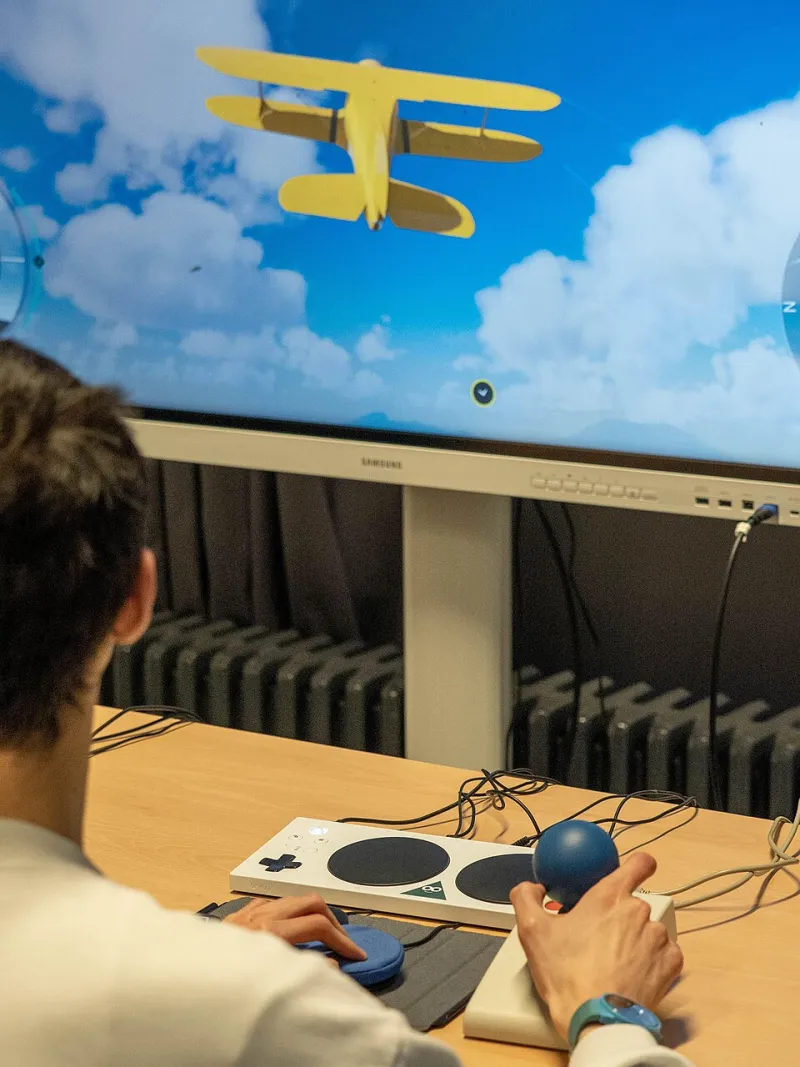
Adaptive controllers are moving out of niche kits and into mainstream UK living rooms, but the real shift is less about flashy hardware and more about standardisation. In 2026, the question is whether accessibility can become a default setting rather than a specialist purchase.

Spanner in the Works: How Britain's Gamers Became Their Own Console Mechanics
Culture

Spanner in the Works: How Britain's Gamers Became Their Own Console Mechanics

Drifting sticks, wheezing fans and handhelds with tired batteries used to mean one thing: buy new. Not anymore. Across the UK, a scrappy network of repair cafés, back-room workshops and tutorial-hungry tinkerers is turning console maintenance into a genuine part of gaming literacy — and quietly rewriting what it means to own a machine.

The Library Card as Controller: How UK Public Libraries Are Testing Game Lending
Culture

The Library Card as Controller: How UK Public Libraries Are Testing Game Lending

Public libraries have spent the past few years quietly adding game discs, consoles and after-school clubs to their offer. In 2026, the question is no longer whether games belong on the shelf, but how libraries choose them, rate them and keep them playable.

Dead Servers, Living History: The UK Volunteers Rescuing Games From Oblivion
Culture

Dead Servers, Living History: The UK Volunteers Rescuing Games From Oblivion

When a server goes dark or a storefront delists an old title, a game doesn't just get old — it can disappear. Across Britain, a loose network of volunteers, museums and modders is trying to keep the country's game history playable, and running headfirst into copyright law, dead hardware and lost source code.

Who Actually Owns Your Console? Britain's Hardware Hire Boom
Culture

Who Actually Owns Your Console? Britain's Hardware Hire Boom

Console subscriptions and short-term hardware hire are moving from niche to normal in the UK. We run the numbers on leasing versus buying — and ask what happens to the second-hand market when fewer of us ever own the box under the telly.