The 07:42 Server: Handheld PCs, Patchy Wi-Fi and the Truth About Commute Gaming
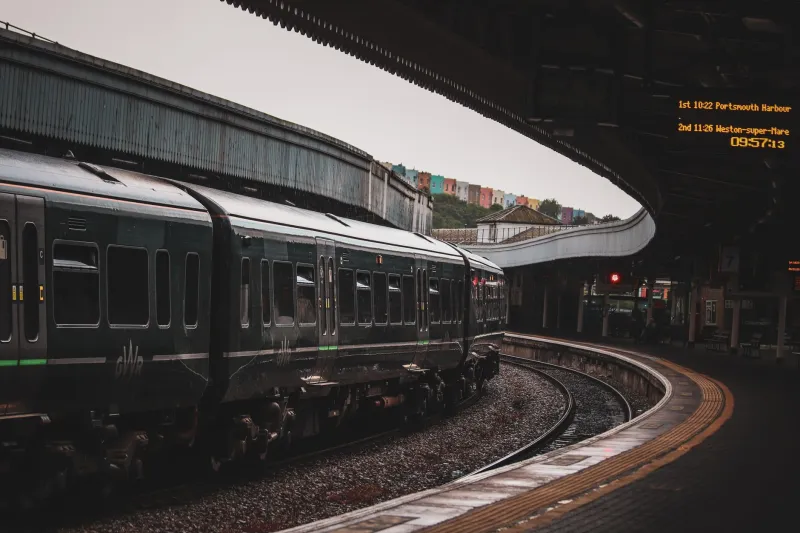
There is a particular sound on the 07:42 out of Leeds: the soft clack of a train door, the rustle of a meal deal bag, and the faint whir of a handheld PC waking from sleep. Ten years ago the commuter gaming crowd was mostly a constellation of phones and the occasional Switch. In 2026, the cabin is filling up with small, fan-cooled machines that promise a full desktop-class library in a rucksack.
The pitch is seductive. Steam Deck, ROG Ally, Legion Go and their successors have spent the past couple of years shrinking the gaming PC into something you can hold. The result is a new kind of playtime, wedged between stations and spreadsheets. But the reality of commute gaming in the UK is messier than the marketing suggests — a tangle of battery percentages, patchy signal and the awkward geometry of a train seat.
From spare room to carriage
The shift is easy to spot if you use public transport regularly. Ask around any office and someone will have a story about finishing a run of a roguelike between Crewe and Euston, or chipping away at a long RPG on a coach to Bristol. The hardware has become genuinely capable: OLED screens, better cooling, more efficient chips, and a growing library of games that default to sensible settings rather than demanding a desktop.
It is not only about the devices. The wider infrastructure of British travel has, quietly, become more gaming-friendly. More carriages have plug sockets than they did five years ago. Standard seats on some intercity services now come with USB-C. Even the humble motorway services have become a place to stretch your legs and your save file.
But capability is not the same as comfort. The appeal of a handheld PC is that it collapses the distinction between the games you play at a desk and the games you play elsewhere. The problem is that "elsewhere" is rarely designed for a 7-inch screen and a pair of analogue sticks.
The battery maths is still the boss
Any honest conversation about commute gaming starts with power. Manufacturers quote impressive numbers, but real-world play is a different sport. A demanding 3D title with brightness up and Wi-Fi on can chew through a charge in under two hours on many devices — roughly the length of a decent podcast, and rather less than a return trip from Manchester to London.
Commuting is unusually hostile to batteries. You are often starting from a partial charge because the device came out of a bag at 6am. You are likely to have Bluetooth headphones connected, which adds drain. And if you are using onboard Wi-Fi or a mobile hotspot, the radio is working harder than it would at home.
The savviest players have adapted. They drop the TDP, cap the frame rate, lower the resolution, and treat the machine as a machine rather than a magic box. Some carry power banks rated for USB-C Power Delivery. Others have learned that the plug socket in coach C is not a guarantee so much as a rumour, and that a seat with a working outlet is worth booking in advance.
This is the first genuine friction point. Commute gaming rewards planning. The players who get the most out of it are the ones who treat a journey like a flight: charge beforehand, download the patch, decide on the game before the ticket is scanned.
The Wi-Fi lottery
The second friction point is connectivity, and it is more British than the weather. Onboard rail Wi-Fi has improved, but it is still inconsistent; a service that streams perfectly at one end of the line can crawl through a tunnel or a rural stretch. Mobile coverage has the same patchwork quality. There are dead zones on the approach to major stations that can swallow a cloud save request without a trace.
The result is that offline play has become the default for serious commute gamers. Steam's offline mode is well-worn territory. Game Pass titles are downloaded in advance rather than streamed. Cloud saves are synced at home and treated with suspicion on the move. The handheld PC, which is at its best when connected, is often used in a deliberately disconnected way.
That tension is worth watching for the wider industry. Cloud gaming promised to remove the hardware from the equation, but the commute is precisely where cloud gaming struggles. The handheld PC wins there because it is self-contained. It is, in effect, a local server in your bag.
A full PC in coach B
Then there is the social reality. A handheld PC is not a phone. It is a chunky device with a fan, a bright screen and, depending on the model, a pair of detachable controllers that can look faintly ridiculous on a crowded Northern service.
Some of this is practical. Elbow room is limited. The person next to you may not appreciate a fan spinning up during a boss fight. Headphones are non-negotiable, and even then, the occasional accidental speaker blurt is a rite of passage. The devices are quieter than gaming laptops, but they are not silent.
Some of it is cultural. Britain has a long tradition of not making eye contact on public transport, and a glowing screen is a useful shield. In that sense, handheld PCs fit neatly into the existing etiquette: head down, volume low, no unnecessary conversation. The gaming is almost invisible until someone spots the frame rate.
There is also a generational divide. Younger commuters are more likely to see a handheld PC as unremarkable, the natural next step from a phone. Older passengers sometimes treat it as a curiosity, the sort of thing that prompts a question about whether it plays "the football ones". Both reactions are part of the texture of the commute.
The price of a portable habit
None of this comes cheap. A decent handheld PC still costs several hundred pounds, and the high-end models push towards four figures. That is a lot to spend on something that competes with a phone, a laptop and a console for attention.
The value case depends on how often you travel. For a daily commuter with an hour each way, the maths can work: a device that costs £600 and gets used two hours a day, five days a week, quickly becomes one of the cheapest forms of entertainment per hour in the house. For someone who takes the train twice a month, it is harder to justify.
There is also the question of what it replaces. Some players have found that a handheld PC has taken over from a console rather than sitting alongside it, because it fits into the small gaps in the day that a TV cannot reach. Others have found the opposite: the device is a companion, not a replacement, and the big screen still wins for the games that matter most.
Novelty or shift?
The honest answer is that commute gaming is somewhere in between. The hardware has improved enough that it is no longer a gimmick. But the infrastructure — battery life, connectivity, seating, charging — has not caught up. The result is a habit that works beautifully for some journeys and falls apart on others.
What would push it from novelty to norm? Better batteries would help. So would more reliable onboard connectivity and a standard for seat-side power that actually delivers. Cheaper devices would widen the audience. And game design could do more to support short, suspendable sessions rather than assuming a long, uninterrupted sit.
For now, the most revealing thing about commute gaming is what it says about how British players fit games into their lives. The living room is still the centre of gravity, but the edges are getting busier. The 07:42 is no longer just a place to endure; for a growing number of passengers, it is a place to play.