Standard Fit: The Quiet Push to Make Adaptive Controllers Boring
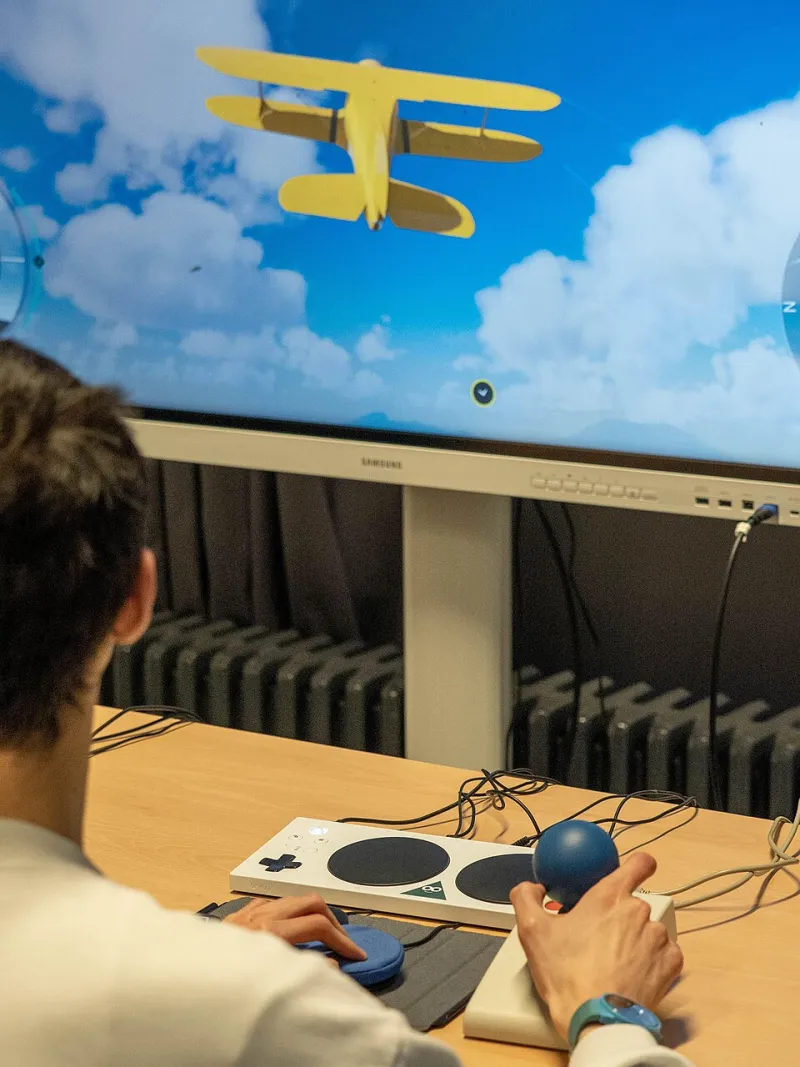
Photo: InclusiveGameLab, CC BY-SA 4.0, via Wikimedia Commons
Adaptive controllers have spent the past decade being framed as a moral good. In 2026, the more interesting question is whether they can become boring. That is not an insult. Boring is what happens when a piece of technology stops being a special case and starts being a default.
You can see the shift in the hardware itself. Microsoft’s Adaptive Controller, which launched back in 2018, was a statement piece: a white slab of inputs designed to be paired with switches, mounts and whatever else a player needed. Sony’s Access Controller arrived in 2023 with a similar message, packaged as a serious product rather than a charitable gesture. Add in the growing range of hubs, buttons and 3D-printed mounts sold by specialist UK outfits, and the pitch has changed. This is no longer just about helping disabled players get through the door. It is about selling flexible input devices to anyone who finds a standard pad uncomfortable, imprecise or simply exhausting.
From charity case to product line
SpecialEffect, the Oxfordshire-based charity, has been the most visible UK name in this space for years. Its work remains essential, particularly for players who need bespoke setups that no manufacturer will ever mass-produce. But the commercial story around it is different now. Major UK retailers list at least some adaptive kit, even if the shelf space is modest and the staff knowledge is patchy. Games themselves are more accommodating too. Remapping, toggle holds, sensitivity curves and adjustable timing windows have crept into mainstream releases, often because a small number of developers pushed for them and found that the work was not as expensive as feared.
The Game Accessibility Guidelines, a UK-led project that has become a reference point for studios worldwide, have helped make those features feel less like favours and more like part of the job. When a mid-sized British studio adds a hold-to-toggle option now, it is rarely treated as a bespoke accessibility mode. It is a settings-menu item. That sounds small. It is not.
The demo unit problem
There is a gap, though, between a product being available and a product being buyable. Most British players still encounter controllers in two places: online, where you cannot feel the weight or reach of a device, and on a high street, where the demo pod is usually bolted to a football game and a racing game with a standard pad. Adaptive controllers rarely appear on those pods. If you are spending sub-£100 on a specialist device, or several hundred pounds on a custom setup, the absence of a try-before-you-buy option is a real barrier.
Distance-selling rules give online buyers a window to return unwanted goods, but customised mounts and modified controllers can fall outside that protection. For a parent in Birmingham or a player in Glasgow trying to work out whether a particular switch layout will suit them, the risk is not just financial. It is the risk of another failed purchase in a category where failure is already familiar.
Some retailers are beginning to experiment with appointment-based demos and accessible gaming sessions, often in partnership with charities. These are welcome, but they are still exceptions. The mainstream path runs through ordinary retail: clear labelling, returns policies that account for trial use, and staff who can explain what a hub actually does without reaching for the phrase ‘special needs’.
What ‘standard’ actually costs
Standardisation is the unglamourous part of this story. It means profiles that save to a console or the cloud rather than living on a single game. It means USB and Bluetooth connections that behave predictably across devices. It means button labels that make sense without a manual. If an adaptive controller needs a PC, a forum thread and an hour of configuration to work with a new release, it is not mainstream. It is a project.
British studios have a role here too. The economics have quietly flipped. Accessibility features used to be seen as an add-on, something you added if you had time and budget. Now they are increasingly a QA and design issue: cheaper to build in than to patch later, and easier to test when the settings are standardised. That is not altruism. It is good product management.
The next boring thing
By the end of 2026, adaptive controllers will still not be ubiquitous. They will still be too expensive for some, too fiddly for others, and too poorly stocked on too many British high streets. But the conversation has moved. The question is no longer whether accessibility belongs in a mainstream controller. It is why the baseline is still so low.
The most radical thing the industry could do next is make this technology dull: a standard fit, a standard return policy, a standard settings menu. When adaptive kit stops being a headline, it will have finally arrived.