The Scene Nobody Reviewed: Britain's Age Ratings Meet the Game That Writes Itself

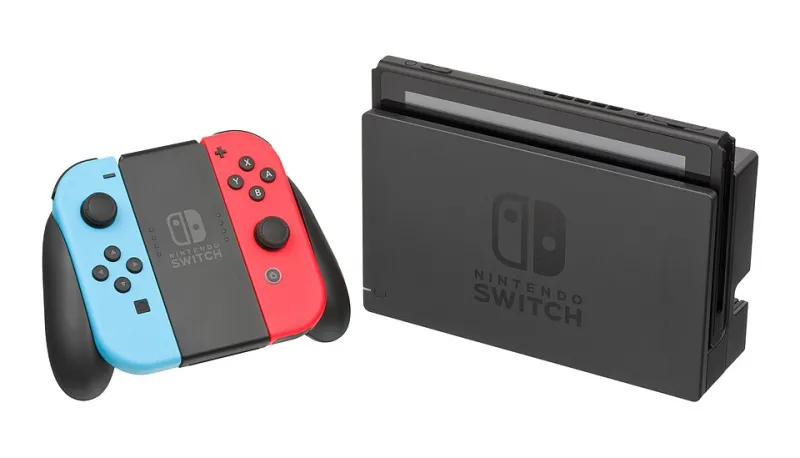
Photo: Gulshan Developer, CC BY-SA 4.0, via Wikimedia Commons
There is a quiet assumption baked into every age rating ever printed on a game box: that the game is finished. Someone played it, someone counted the swearwords, someone sat through the bits that might frighten a ten-year-old, and a badge was issued on that basis. In 2026 that assumption is starting to look quaint.
A live-service title with a generative layer can produce dialogue, textures, mission text or entire incidental scenes on the fly. Not at launch, not in a build someone signed off in a meeting room in Royal Leamington Spa — at 3am, for one player, in a form nobody employed by the studio has ever laid eyes on. The badge on the store page was issued long before. That gap is now the most interesting problem in UK games classification, and it is not going away.
The tick-box meets the machine
British game ratings run on disclosure. Since 2012 the PEGI system has been the UK's statutory age rating for video games, with the BBFC as the designated authority enforcing it and the Video Standards Council handling administration. For physical releases that means a submission, a fee and a look at the content. For the vast majority of digital storefronts it means something leaner: the International Age Rating Coalition questionnaire, a self-declared form that a publisher fills in and that spits out a rating across multiple territories at once.
That system works precisely because it is declarative. You tell the board what is in the game, you get a badge, and if you lied the consequences land on you. It is fast, cheap and reasonably honest. It also assumes the answer to 'what is in the game' stays the same next Tuesday.
What a PEGI 16 actually promises
Parents treat the age badge as a fixed property of a product, in the same way a beer bottle is 4.5% or a packet of peanuts lists its allergens. The descriptors behind the badge — bad language, violence, fear, gambling, in-game purchases — read like an ingredients list. Nothing on that badge says 'contents may vary depending on what the model decides to output tonight'.
That is the awkward bit. A rating is a snapshot presented as a guarantee, and generative systems quietly convert it into an estimate. The industry's answer so far has mostly been to lean on the same guardrails it uses for chat moderation: filters, blocklists, refusal behaviours, human review of flagged outputs. Useful, certainly. But a filter is not a classification decision, and 'we tried to stop it' is a different sentence to 'we reviewed it before release'.
Who actually signs the form?
The liability question is where things get genuinely tangled, because the chain is longer than it looks. A developer integrates a model. A publisher fills in the questionnaire. A platform hosts the store page and enforces the rating. A model provider supplies the thing that generates the text in the first place, usually under terms that say it is not responsible for outputs.
When an unrated scene turns up in a game rated 12 — something violent, something sexual, something with language that would shift the badge by two age bands — every link in that chain has a defensible reason why it is not their problem. The studio will say the model produced it. The model provider will point at its acceptable use policy. The platform will point at the publisher's declaration. The rating body will point out, reasonably, that it was told the game was one thing and the game turned out to be another.
There is consumer law sitting in the background here. Misleading claims about a product's content have been enforceable for years, and the competition watchdog's powers over unfair commercial practices were strengthened in the mid-2020s. Nobody has yet run a generative content case through that machinery, but the paperwork for one already exists.
Live service has always been a bit like this
Worth saying: this is not an entirely new problem wearing a new hat. Games have shipped seasonal content, hotfixes and player-created levels for years, and ratings have coped via re-submission for material changes and a healthy dose of trust. The Online Safety Act pushed user-to-user services — including game chat and sharing features — into a regulated moderation regime, and studios have built real teams around that.
The difference is authorship. A player posting a slur in voice chat is one thing; the game's own narrator generating one is another. When the software is the author, the neat distinction between 'content we made' and 'content our players made' collapses, and the legal scaffolding built around that distinction goes with it.
What a grown-up version might look like
There are unglamorous fixes available, and they are the sort Britain is actually quite good at. A dedicated disclosure line on the IARC questionnaire for generative features would cost nothing and tell every rating body something it currently has to guess. A stated trigger for what counts as a material change in a live game — rather than leaving it to publisher judgement — would give compliance teams something concrete to point at. Logging and retention requirements would at least make an incident reconstructable after the fact.
The UK has an odd advantage here. It has a single statutory authority for game ratings, a small number of very large publishers, a trade body that likes a working group, and a classification board with decades of experience of arguing about content in public. That is a configuration capable of moving faster than Brussels or Washington, if anyone decides it should.
The bill turns up eventually
The most likely outcome is not a landmark ruling but a slow accumulation of small ones: a refund here, a platform delisting there, an insurer asking awkward questions about generative features on a renewal form. Liability rarely gets settled by principle. It gets settled by whoever is holding the invoice when something genuinely unpleasant appears in a game a child is playing.
Until then, the badge on the store page will keep making a promise it cannot entirely keep. It is not that the system is broken — it is that the system was built for a world where a game was a thing you finished. In 2026, more and more of them are not.