The Kilowatt in the Case: Britain's Long Wait for a Game Carbon Label
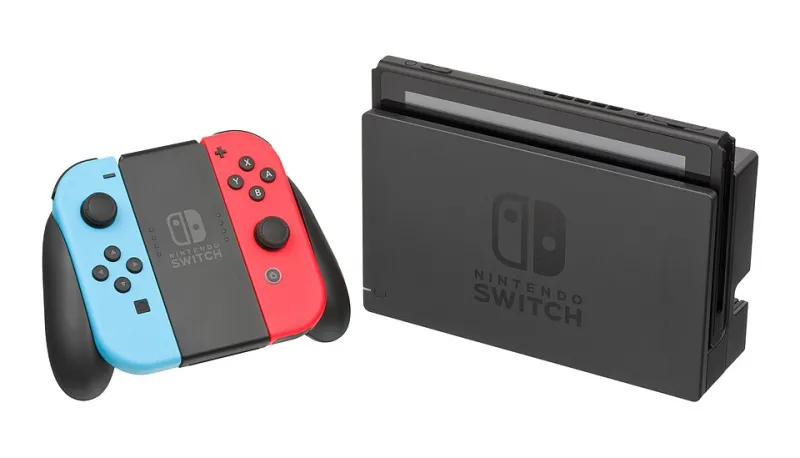
Photo: Evan-Amos, Public domain, via Wikimedia Commons
You can buy a kettle with a colour-coded energy sticker. You can scan a supermarket sandwich and see its carbon footprint. But the game you downloaded last night? Nothing. No number, no rating, no hint of the electricity that went into making it, moving it and playing it. For a medium that increasingly lives in data centres and runs on always-online infrastructure, that silence is starting to feel odd.
The idea of a carbon label for games is not new. It floats around conferences, sustainability reports and the occasional panel at a UK games event. But as 2026 rolls on, it remains firmly in the 'interesting thought experiment' pile. The question is whether it belongs there.
What Exactly Would the Sticker Say?
Start with the obvious problem: what do you measure? A film has a runtime. A fridge has an annual kWh figure. A game has a download size, a playtime, a patch history and a hardware requirement that could mean anything from a Steam Deck to a three-fan desktop. Two people playing the same title for an hour can have wildly different energy profiles depending on their setup, their settings and whether they are streaming it or running it locally.
Then there is the cloud question. A cloud gaming session shifts the compute to a data centre, but it also adds network transmission and video decoding. Local play shifts the load to your living room, but your console might be drawing 200 watts. Which one gets the label? The server-side number or the player-side number? Both? A label that tries to capture everything risks becoming a spreadsheet in a font too small to read.
There is also the matter of scope. Do you count the energy used to develop the game? The office heating, the dev kits, the years of iteration? Most carbon accounting splits emissions into scopes, and games sit awkwardly across all three. A studio can measure its own gas and electricity bill. It has far less control over what happens when millions of players download a 100GB patch.
The Grid Doesn't Sit Still
Even if you settled on a metric, the UK's electricity grid refuses to cooperate. Carbon intensity per kilowatt-hour changes hour by hour. A game played at 6pm on a cold January evening is running on a very different mix from the same game played at 3am in July. Add location to the mix. Scotland has a lot of wind. Cornwall has a lot of sun. The national average is just that: an average.
So a static label on a store page would be wrong most of the time. A dynamic label, updated in real time, would be more accurate but also more confusing. Imagine a store page that says 'this game is 12g CO2e per hour right now, but might be 28g later.' It is honest, but it is not exactly a buying decision.
Some researchers have suggested using a range or a traffic-light system, similar to food labels. Green for low intensity, red for high. But even that runs into the same problem: the range depends on where and when you play. A label that says 'varies' is not a label at all.
Studios Are Counting, Not Confessing
Behind the scenes, plenty of UK studios are already doing the maths. Sustainability leads at larger publishers have been measuring scope 1 and 2 emissions for years, partly for investor reports and partly because it saves money. Scope 3, which covers the supply chain and player electricity, is trickier and often estimated rather than measured.
But measuring internally is a long way from printing a number on a box. Publishers are wary of consumer labels for good reason. A label invites comparison, and comparison invites backlash. If Game A gets a green rating and Game B gets an amber one, what does that mean? That Game B is worse? That its developers don't care? The nuance gets lost in a screenshot war on social media.
Retailers are not rushing either. Digital storefronts have limited space and even less appetite for complexity. Physical boxes still exist, but they are a niche within a niche. A carbon sticker on a plastic case would be a nice gesture, but it would not reach most players. The UK's second-hand market, from CeX to Facebook Marketplace, would not be covered at all.
Would a Label Change What You Buy?
Here is the uncomfortable question: would anyone actually care? Evidence from food labelling is mixed. Some shoppers use it, many ignore it, and a determined minority will always buy the cheap thing regardless. Games are emotional purchases. You buy them because your friends are playing, because the trailer looked good, because it is Friday and you have had a week.
A carbon label would sit alongside price, genre, review score and whether it runs on your machine. It is hard to imagine it winning that fight. There is also a risk of gaming the metric. If a label measures download size, studios might compress more aggressively. If it measures playtime, they might make shorter games. Neither is necessarily bad, but neither is the same as reducing real emissions.
The more promising route might be platform-level tools rather than product labels. Imagine a console or PC launcher that shows an estimated energy use per hour based on your settings, your hardware and the current grid mix. Not a sticker on a store page, but a live readout in your own home. It would not compare games, but it would help players understand their own habits. That feels more useful than a single number on a download button.
A Label Without a Standard Is Just a Sticker
None of this means the idea is worthless. Carbon labels have helped other industries think seriously about supply chains, and the act of measuring often reveals easy wins. But a label only works if there is an agreed standard, a clear method and a consumer who understands what they are looking at. Right now, games have none of those things.
So British gamers are unlikely to see a carbon label on a game box or a store page in 2026. They might see a pilot scheme, a voluntary badge from a forward-thinking studio, or a sustainability report buried on a publisher's website. But a universal, comparable label? That is a long way off.
The watts are there, in the save file, in the download, in the data centre. They are just not labelled. And until the industry agrees on what a label would even mean, that is probably for the best.