The Shelves Are Fighting Back: Why British Players Are Falling for Physical Games Again
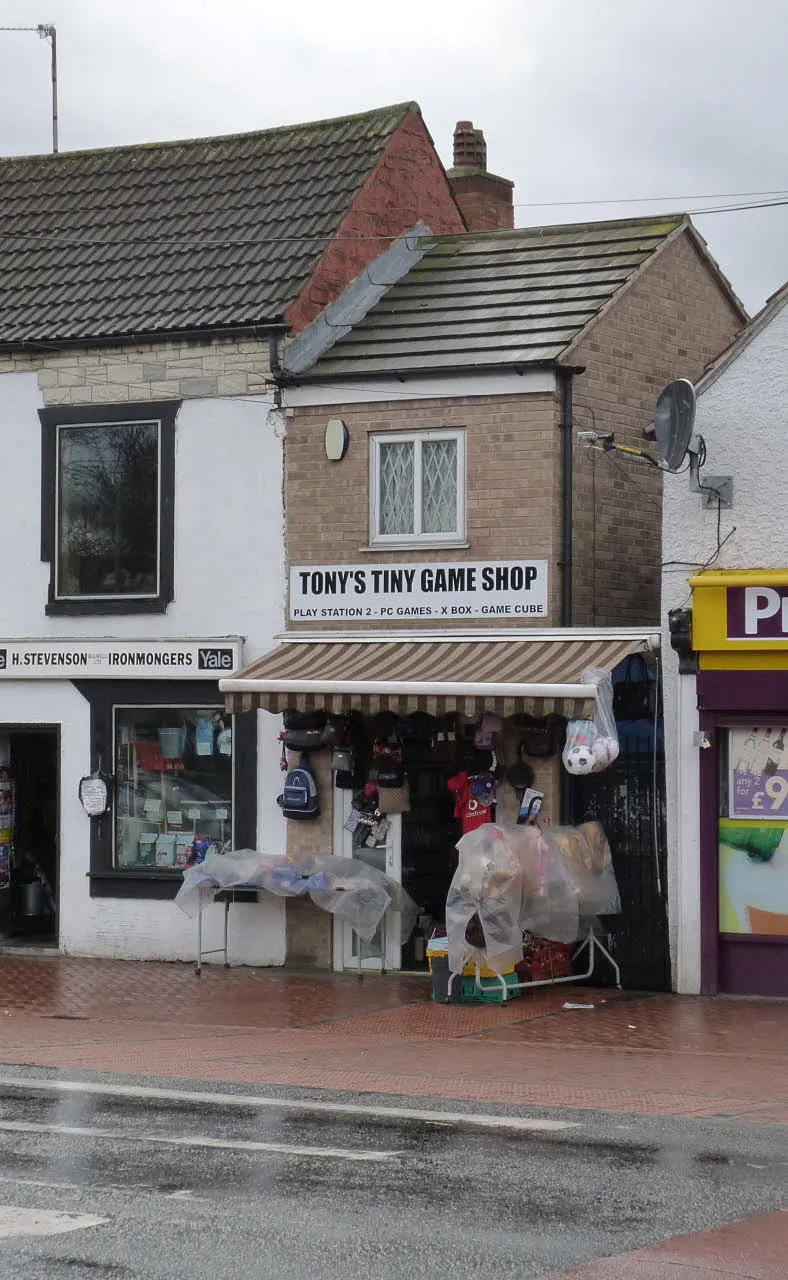
Photo: Alan Murray-Rust , CC BY-SA 2.0, via Wikimedia Commons
For years, the story of physical games has been told as a slow retreat. Downloads got faster, consoles got slimmer, and the disc drive started to feel like a nostalgic extra. Yet in 2026, the physical game has developed an unexpected stubborn streak. Walk into a CeX on a wet Saturday, browse a charity shop shelf in a market town, or watch a car boot sale in the Home Counties and you will find the same thing: boxes, manuals, scratched cases and people who care about them.
This is not a triumphant return to the aisles of 2008. Digital is still how most of us play most of the time. But the disc has found a second life as a practical object, a social currency and a small act of rebellion against the idea that everything must live in an account.
The comfort of a box you can lend
Part of the shift is about ownership anxiety. British players have spent the last few years watching digital storefronts close, games get delisted and old purchases become harder to reach. When the Wii U and 3DS eShops shut in 2023, and when the Xbox 360 store followed in 2024, it was a reminder that a digital library is only as permanent as the company maintaining it.
A disc does not solve every problem. It still needs patches, servers and sometimes a big day-one download. But it does something a licence does not: it sits on a shelf. You can lend it to a mate. You can take it to a trade-in counter. You can buy it for a tenner in a charity shop and discover a game you would never have risked full price on. In a culture where so much of our media feels rented, that small physical fact matters.
There is also the plain British practicality of it. A £70 game is a household decision. If you finish it in twelve hours and never touch it again, a physical copy lets you claw something back. That is not romance; it is budgeting. CeX queues and eBay listings are full of people doing the maths in public.
The second-hand shelf is doing the heavy lifting
What makes the current resurgence interesting is that it is not being led by glossy new releases. It is being led by pre-owned copies, collector editions and the long tail of games that never quite left the shelf. Independent shops have learned to treat physical stock as a curated thing rather than a wall of shrink-wrapped boxes. The best ones feel less like retail and more like a record shop for people who know what a day-one patch is.
That matters because the high street has changed. GAME is no longer the omnipresent fixture it once was, and many towns have lost their dedicated game shops. But the physical market has not vanished; it has become more specialist. Smyths still sells new releases, supermarkets have their small pockets of stock, and online retailers will happily post a box to your door. Meanwhile, the pre-owned market has become the place where physical games feel most alive.
When the storefront shuts, the shelf stays
Preservation is the word that keeps coming up. The UK has a strong tradition of caring about game history — the National Videogame Museum in Sheffield is one obvious example — but preservation is not only for museums. It is also for the person who wants to play a delisted racing game in 2031, or show a child what a manual used to feel like.
Physical media is not a magic preservation spell. Discs rot, servers die and online-only games become coasters. But a shelf copy is at least a starting point. It gives collectors, archivists and ordinary players something to work with. In a medium that constantly pushes forward, that is a quietly valuable thing.
A niche, not a comeback
It would be easy to overstate this. Physical games are not about to retake the market, and most UK players will keep buying digital because it is convenient, fast and often cheaper in a sale. The disc is not winning; it is settling.
But settling is not the same as dying. Vinyl did not replace streaming, and paper books did not disappear because of e-readers. Physical games are heading in a similar direction: smaller, more deliberate, more expensive per unit, and more meaningful to the people who choose them. In 2026, the British disc is less a mass-market format and more a statement of intent. The shelves are fighting back — not to win the whole room, but to keep a corner of it.