Future of Video Games Home

Category

Culture

18 articles

The 400-Hour Ghost in the Probate Office

The 400-Hour Ghost in the Probate Office

When a UK player dies, the games they spent years with often become unreachable, locked behind account terms that were never written with grief in mind. This is the quiet collision between probate law, platform contracts and the save files we leave behind.

Mercy Is a Metric Now: How UK Studios Are Teaching Games to Read the Room

Mercy Is a Metric Now: How UK Studios Are Teaching Games to Read the Room

Adaptive difficulty used to mean a hidden slider and a slightly softer boss. In 2026, British studios are wiring telemetry, player-choice data and machine learning into the difficulty curve itself. The question is no longer whether games should meet us halfway, but whether we want them to notice when we're tired.

The Sixth Form Server Room: What Britain's Esports Diplomas Actually Teach

The Sixth Form Server Room: What Britain's Esports Diplomas Actually Teach

Further-education esports courses are now a fixture on college prospectuses, promising routes into coaching, broadcast and events. We look at what the timetable actually contains in 2026 — and whether it is a pipeline into the UK games industry or a recruitment pitch with a controller.

The Workshop Route: Who Gets to Build Games in Britain?

The Workshop Route: Who Gets to Build Games in Britain?

Apprenticeships are being pitched as the games industry’s answer to the campus pipeline — a way to learn QA, production and community work without a £50,000 degree. But in 2026, the reality is messier: patchy geography, modest pay and a lingering fear that training schemes can become cheap labour with a certificate attached.

The Bingo Hall Has a Boss Fight Now: Inside Britain's Care Home Playtests

The Bingo Hall Has a Boss Fight Now: Inside Britain's Care Home Playtests

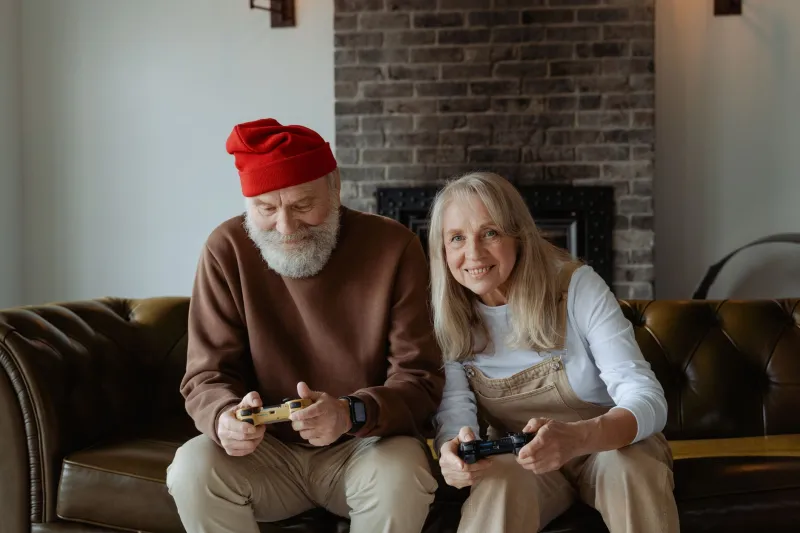
Care homes and community centres across the UK are quietly becoming games test labs, with co-op consoles and simplified controllers used as social prescriptions for isolation. We look at what older players actually want, how studios are responding, and why pensioner playtesting could change accessibility and co-op design for everyone.

Spanner in the Works: How Britain's Gamers Became Their Own Console Mechanics

Spanner in the Works: How Britain's Gamers Became Their Own Console Mechanics

Drifting sticks, wheezing fans and handhelds with tired batteries used to mean one thing: buy new. Not anymore. Across the UK, a scrappy network of repair cafés, back-room workshops and tutorial-hungry tinkerers is turning console maintenance into a genuine part of gaming literacy — and quietly rewriting what it means to own a machine.

Dead Servers, Living History: The UK Volunteers Rescuing Games From Oblivion

Dead Servers, Living History: The UK Volunteers Rescuing Games From Oblivion

When a server goes dark or a storefront delists an old title, a game doesn't just get old — it can disappear. Across Britain, a loose network of volunteers, museums and modders is trying to keep the country's game history playable, and running headfirst into copyright law, dead hardware and lost source code.

Who Actually Owns Your Console? Britain's Hardware Hire Boom

Who Actually Owns Your Console? Britain's Hardware Hire Boom

Console subscriptions and short-term hardware hire are moving from niche to normal in the UK. We run the numbers on leasing versus buying — and ask what happens to the second-hand market when fewer of us ever own the box under the telly.

Stick Drift and Small Talk: Why Britain's Arcade Bars Are Pulling Us Off the Sofa

From converted bank branches to railway arches, the UK's new wave of arcade bars and indie game cafés has turned gaming into a night out. We ask what these rooms are really selling, how the economics stack up, and why the tournament night might be the most important thing on the high street since the pool table.